Q1.
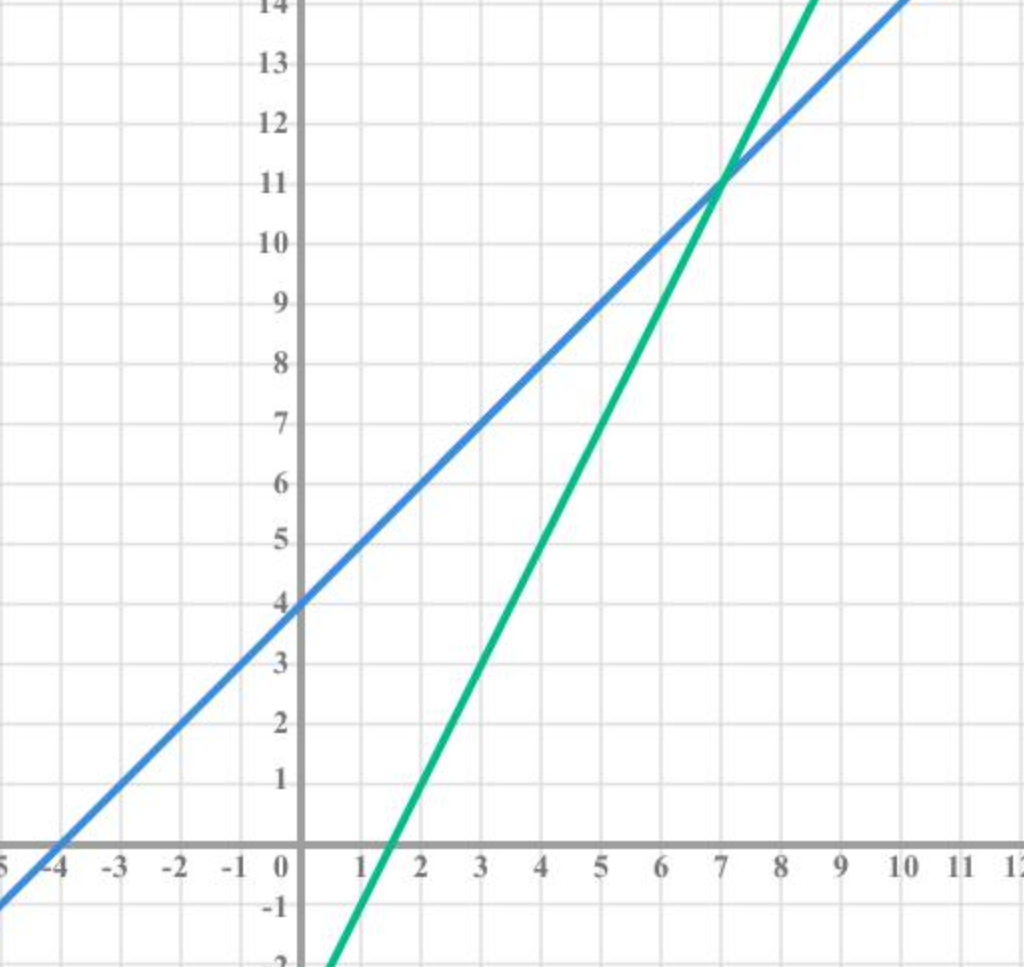
The diagram above shows the straight lines L-1 and L-2.
(a). Find the equation of the above two lines in the gradient – intercept form
(b). Write both the equations in the general form ax + by + c = 0, where a, b, c are integers
(c). Find the point of intersection of the two lines.
Q2.
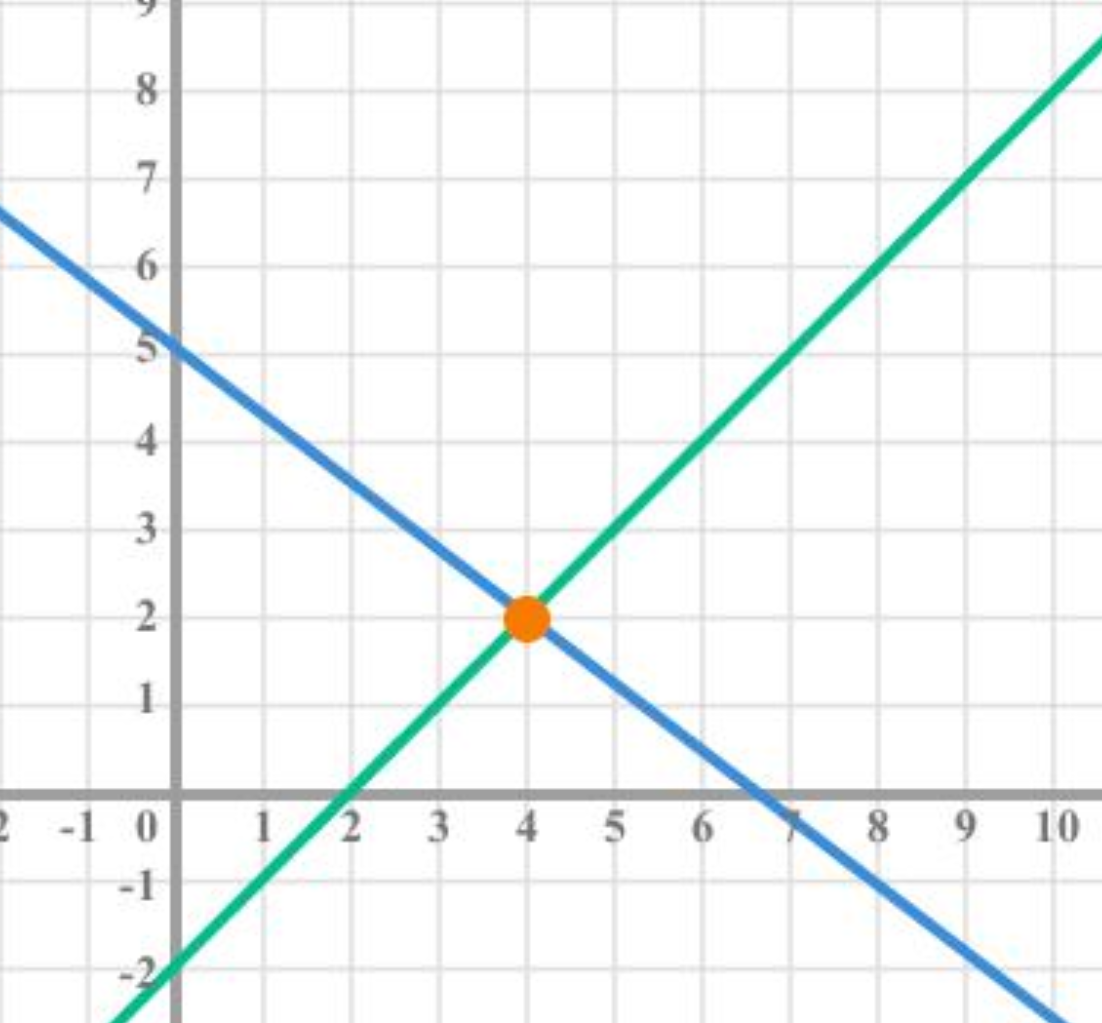
The diagram above shows the straight lines L-1 and L-2.
(a). Find the equation of the above two lines in the gradient – intercept form
(b). Write both the equations in the general form ax + by + c = 0, where a, b, c are integers
(c). Find the point of intersection of the two lines.
Q3.
David goes into a car dealership to purchase a new vehicle. The one he wants to buy costs $16 000, however he doesn’t have that much money in his bank. The salesman offers him a financing option of a 30% deposit followed by 12 monthly payments of $1150.
(a) Find the amount of the deposit. [1]
(b) Calculate the total cost of the loan under this financing option. [2]
David’s father generously offers him an interest free loan of $16 000 to buy the car to avoid the expensive loan repayments. They agree that David will repay the loan by paying his father $x in the first month and $y every following month until the $16 000 is repaid.
The total amount David’s father receives after 12 months is $5200. This can be expressed by the equation
x + 11y = 5200.
The total amount that David’s father receives after 24 months is $10 600.
(c) Write down a second equation involving x and y. [1]
(d) Determine the value of x and the value of y. [2]
(e) Calculate the number of months it will take David’s father to receive the $16 000.
[3]
David decides to buy a cheaper car for $12 000 and invest the remaining $4000. He is considering two investment options over four years.
Option A: Compound interest at an annual rate of 6.5%.
Option B: Compound interest at a nominal annual rate of 6%, compounded monthly.
Express each answer in part (f) to the nearest dollar.
(f) Calculate the value of each investment option after four years. [5]
(i) Option A.
(ii) Option B.